Omega-3 fatty acids are often associated with heart health, but they are also popular in beauty and wellness routines. Many people use omega-3 supplements to support skin, hair, nutrition, and overall well-being.
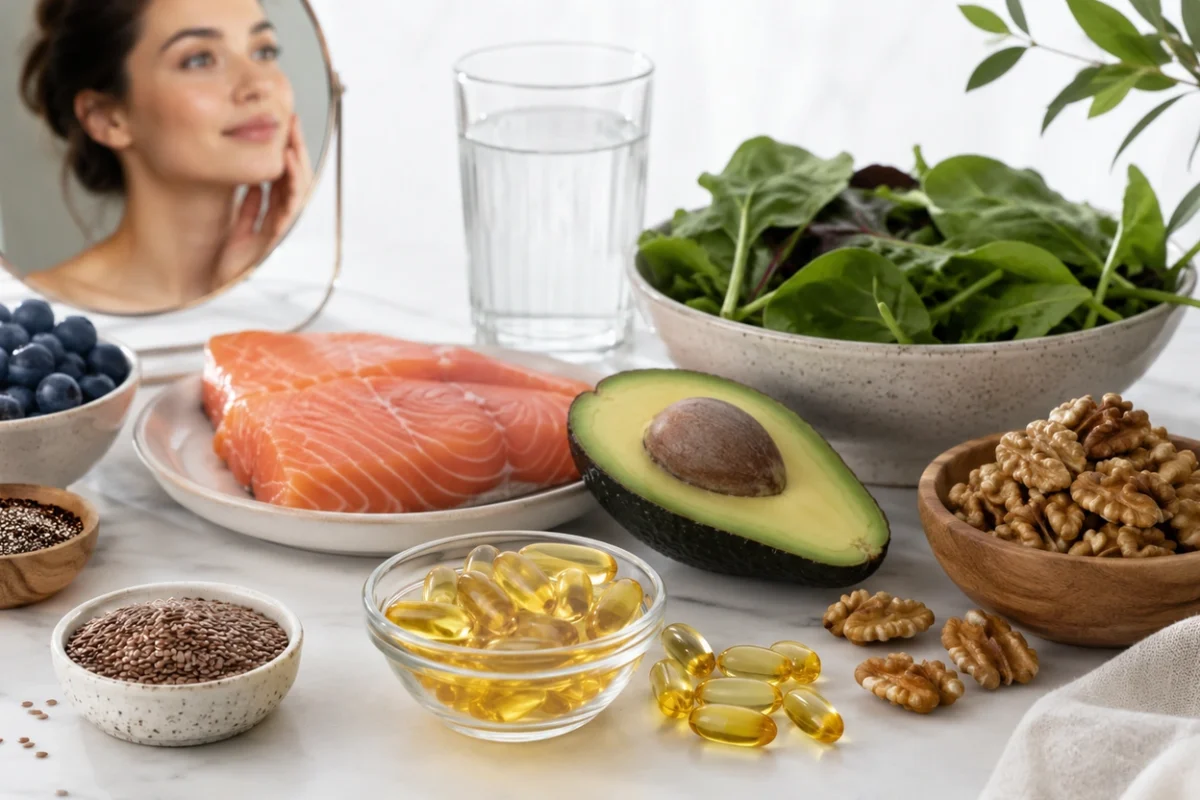
These healthy fats are found in foods such as salmon, sardines, tuna, chia seeds, flaxseeds, walnuts, and algae-based products. They are also available as fish oil, krill oil, and vegan omega-3 supplements.
Omega-3 is not a miracle solution, and it should not replace balanced meals, skincare, sleep, hydration, or medical guidance. However, it can be a helpful part of a healthy lifestyle when used consistently and appropriately.
This guide explains omega-3 benefits for skin, hair, and overall wellness, plus tips for choosing products that fit your routine.
What omega-3 fatty acids are
Omega-3 fatty acids are essential fats. This means the body needs them, but cannot produce enough on its own. Because of that, omega-3 must come from food or supplements.
The three main types are ALA, EPA, and DHA. ALA is found mostly in plant foods such as flaxseeds, chia seeds, and walnuts. EPA and DHA are found mainly in fatty fish and marine sources.
EPA and DHA are often discussed in wellness products because they are directly used by the body. ALA can be converted into EPA and DHA, but this conversion is usually limited.
For people who do not eat fish, algae-based omega-3 supplements can provide DHA and sometimes EPA. This makes them a useful option for vegetarian or vegan routines.
Omega-3 for healthy-looking skin
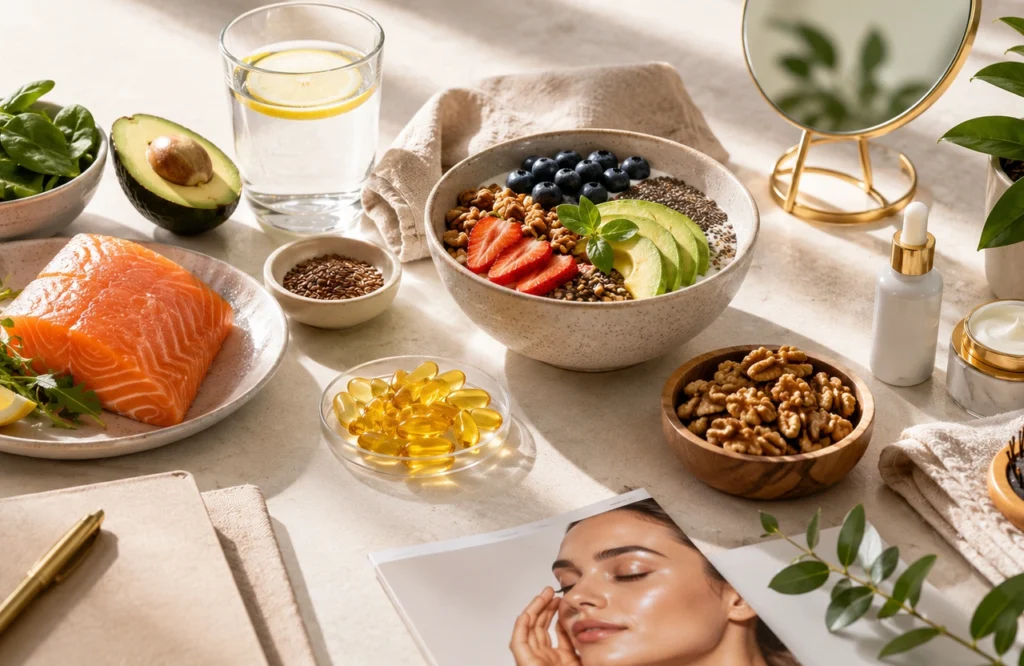
Skin health depends on many factors, including hydration, nutrition, sleep, stress, hormones, and sun protection. Omega-3 can support beauty from within because healthy fats play a role in skin comfort and barrier function.
A balanced intake of healthy fats may help the skin feel more nourished. When the diet is very low in fats, the skin may look dry or dull. Omega-3 foods can be part of a routine focused on a softer, healthier-looking complexion.
Omega-3 may also support the skin’s natural barrier. A strong skin barrier helps reduce moisture loss and protects against environmental stress. This is important for people who want smoother and more comfortable skin.
For best results, combine omega-3 with topical skincare. Use gentle cleanser, moisturizer, and daily sunscreen. Nutrition supports the body from within, while skincare protects the surface.
Omega-3 and hair wellness
Hair appearance is influenced by genetics, hormones, nutrition, stress, and hair care habits. Omega-3 can fit into a hair wellness routine because healthy fats are part of balanced nutrition.
Omega-3 does not guarantee hair growth, and it should not be presented as a cure for hair loss. Still, it may support overall wellness, which can indirectly help the hair look healthier.
A hair-focused routine should also include enough protein, iron, zinc, vitamin D, B vitamins, and hydration. If hair shedding is sudden or severe, professional evaluation is important.
For daily care, avoid harsh brushing, excessive heat styling, tight hairstyles, and aggressive chemical treatments. Nutrition and gentle hair care work better together than either one alone.
Omega-3 supplements may be useful for people who rarely eat fish or other omega-3-rich foods. Choose a product that fits your diet and health needs.
Omega-3 for overall health
Omega-3 is widely known for its connection to heart and wellness support. Many people include fatty fish or fish oil supplements in their routine as part of a balanced lifestyle.
EPA and DHA are commonly associated with cardiovascular wellness. They are also part of normal cell structure and body function.
Omega-3 may also support general inflammation balance in the body. This is one reason these fats appear in many wellness and active lifestyle products.
However, supplements are only one part of the picture. A healthy routine should include a balanced diet, movement, sleep, stress management, and regular medical care.
People who eat fatty fish regularly may already get meaningful omega-3 from food. People who do not eat fish may consider supplements after reviewing their diet and needs.
Best food sources of omega-3
Food should be the first place to look for omega-3. Fatty fish are among the richest sources of EPA and DHA.
Good marine sources include salmon, sardines, mackerel, trout, anchovies, herring, and tuna. These foods can be included in meals with vegetables, whole grains, and healthy oils.
Plant-based sources include chia seeds, flaxseeds, hemp seeds, walnuts, and soy foods. These provide ALA, which is still valuable as part of a balanced diet.
Algae-based foods and supplements can be useful for people who avoid fish. Algae oil is one of the few plant-friendly sources of DHA and sometimes EPA.
Simple omega-3 meal ideas include salmon with quinoa and vegetables, oatmeal with chia seeds, yogurt with walnuts, salad with sardines, or smoothies with ground flaxseed.
Fish oil, krill oil and algae oil
Omega-3 supplements come in several forms. Fish oil is the most common and usually provides EPA and DHA.
Krill oil also contains EPA and DHA and is often marketed as a premium option. Some people prefer it because the capsules may be smaller, but the omega-3 amount per serving can vary.
Algae oil is a plant-based alternative. It is especially useful for vegans, vegetarians, or people who do not consume fish. Many algae oils provide DHA, and some also provide EPA.
When comparing products, check the actual amount of EPA and DHA, not only the total fish oil amount. A large capsule may still contain a lower dose of active omega-3.
Also consider taste, capsule size, freshness, and testing. Quality matters because oils can become unpleasant if they oxidize.
How to choose an omega-3 supplement
Start by choosing the source. Fish oil works for many people. Algae oil is better for plant-based diets. Krill oil may appeal to those who prefer smaller capsules.
Next, read the label carefully. Look for the amount of EPA and DHA per serving. These numbers are more important than the total oil listed on the front of the bottle.
Check for third-party testing when available. This can help confirm purity, quality, and freshness.
Choose packaging that protects the oil. Dark bottles, clear expiration dates, and proper storage instructions are helpful signs.
Avoid products that make exaggerated claims. Omega-3 can support wellness, but it should not promise dramatic beauty results, instant fat loss, or disease cures.
If you take blood thinners, have surgery planned, are pregnant, nursing, or have a medical condition, ask a qualified professional before using omega-3 supplements.
How to take omega-3
Omega-3 supplements are usually taken with meals. Taking them with food, especially meals containing fat, may improve comfort and reduce fishy aftertaste.
If capsules cause burping, try taking them with dinner, choosing enteric-coated capsules, or switching brands. Some people prefer liquid fish oil or algae oil.
Do not assume higher doses are always better. Follow the product label or professional advice. More intake can increase the chance of side effects for some people.
Consistency matters. Omega-3 works best as part of a long-term wellness routine, not as an occasional product used only when you remember.
Store products according to the label. Some oils may need refrigeration after opening.
Omega-3 and beauty from within
Beauty from within means supporting your appearance through nutrition, hydration, and lifestyle habits. Omega-3 can be one piece of that routine.
For skin, combine omega-3-rich foods with vitamin C, protein, water, sunscreen, and moisturizer. For hair, include protein, iron, zinc, vitamin D, and gentle hair care.
Healthy fats also help meals feel more satisfying. Avocado, nuts, seeds, olive oil, and fatty fish can support a balanced diet and make healthy eating more enjoyable.
Supplements are convenient, but they should complement food. If possible, include omega-3 foods in your weekly meals and use supplements when your diet needs support.
Recommended omega-3 products for your routine
A practical omega-3 routine can include foods and supplements that match your lifestyle.
Fish oil capsules are a common choice for people who want EPA and DHA support. Algae oil capsules are ideal for vegan or vegetarian routines. Liquid omega-3 may work for those who dislike swallowing capsules.
You can also support omega-3 intake with pantry staples. Keep chia seeds, flaxseeds, walnuts, canned sardines, or salmon available for simple meals.
A balanced wellness routine may include:
- Fish oil or algae oil supplement
- Fatty fish two or more times per week, if appropriate
- Chia seeds or flaxseeds in breakfast
- Walnuts as a simple snack
- Hydration, skincare, sleep, and regular movement
Omega-3 can support skin, hair, and overall wellness when used with realistic expectations. Choose quality products, read labels carefully, and combine supplements with balanced nutrition and daily self-care.
Explore omega-3 supplements, algae oil, fish oil, healthy fats, skincare essentials, and wellness products to build a routine that supports beauty, nutrition, and long-term healthy living.