Choosing the right moisturizer can make your skincare routine feel easier, more comfortable, and more effective. A good moisturizer helps support the skin barrier, reduce dryness, improve softness, and keep the skin looking fresh throughout the day.
Many people skip moisturizer because they believe it is only necessary for dry skin. Others use creams that are too heavy, too light, or not suited to their skin type. The result can be shine, tightness, clogged-looking pores, irritation, or a routine that feels uncomfortable.
The right moisturizer should match your skin’s needs. Dry skin may need richer creams. Oily skin may prefer lightweight gels. Sensitive skin often needs fragrance-free formulas. Combination skin may require balanced hydration without heaviness.
This guide explains how to choose the right moisturizer for your skin type and how to include it in a simple daily skincare routine.
Why moisturizer matters in skincare
Moisturizer is one of the basic steps in skincare because it helps reduce water loss from the skin. When your skin loses too much moisture, it may feel tight, rough, dull, flaky, or more sensitive than usual.
A good moisturizer supports the skin barrier. This barrier helps protect your skin from environmental stress, pollution, weather changes, and irritation. When the barrier is healthy, the skin usually feels smoother, calmer, and more comfortable.
Moisturizer also helps balance your routine. If you use cleanser, exfoliating products, vitamin C, retinol, or acne-focused treatments, moisturizer can help reduce dryness and improve tolerance.
Even oily skin needs hydration. Oil and water are different. Your skin can be oily and dehydrated at the same time. A lightweight moisturizer can help the skin feel balanced without adding a greasy finish.
How to identify your skin type
Before choosing a moisturizer, observe how your skin behaves during the day. Your skin type can change with weather, stress, age, hormones, skincare products, and lifestyle.
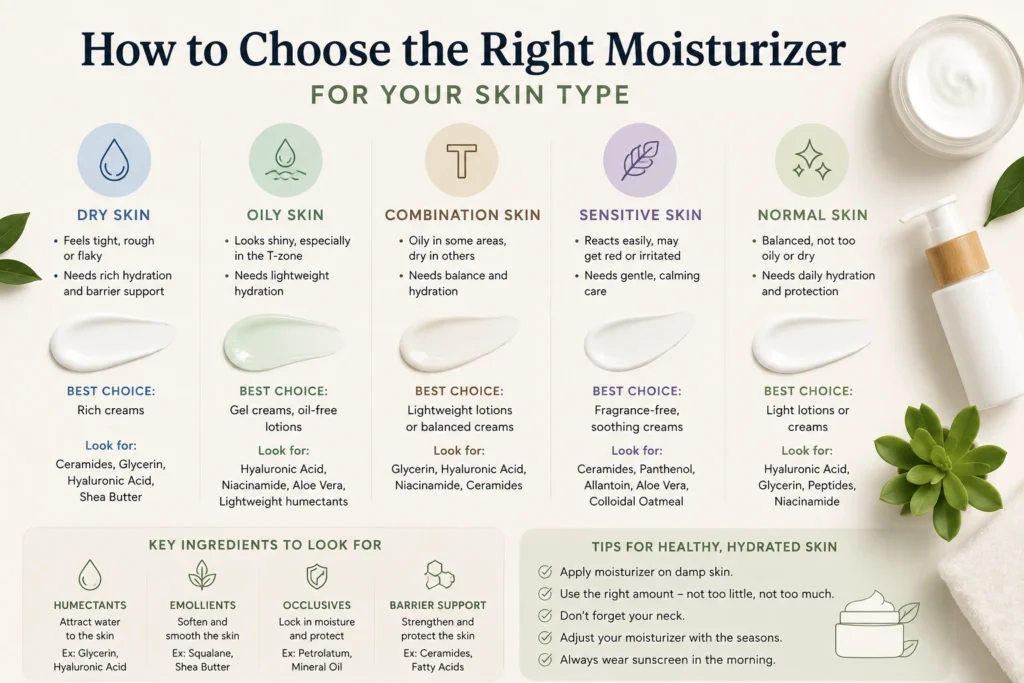
Dry skin often feels tight, rough, or flaky. It may look dull and may absorb moisturizer quickly. People with dry skin usually prefer richer textures that create lasting comfort.
Oily skin often looks shiny, especially around the forehead, nose, and chin. It may feel greasy a few hours after cleansing. People with oily skin usually prefer gel creams, lightweight lotions, or oil-free formulas.
Combination skin has both oily and dry areas. The T-zone may become shiny, while the cheeks may feel normal or dry. This skin type often needs a moisturizer that hydrates without feeling heavy.
Sensitive skin reacts easily. It may become red, itchy, uncomfortable, or irritated after certain products. Sensitive skin usually benefits from gentle, fragrance-free moisturizers with calming ingredients.
Normal skin feels balanced most of the time. It is not too dry or too oily. A simple daily moisturizer can help maintain comfort and support a healthy-looking complexion.
Best moisturizer for dry skin
Dry skin needs moisture and barrier support. If your skin feels tight after cleansing or looks flaky during the day, choose a richer moisturizer.
Look for ingredients such as ceramides, glycerin, hyaluronic acid, shea butter, squalane, and panthenol. These ingredients help support hydration, softness, and comfort.
Creams usually work better than light gels for dry skin. A cream creates a more protective layer and helps the skin feel nourished for longer.
For daytime, choose a moisturizer that layers well under sunscreen. For nighttime, you may prefer a richer cream that supports comfort while you sleep.
If your skin is extremely dry, apply moisturizer when your face is slightly damp. This can help lock in hydration. You can also add a hydrating serum before moisturizer.
Avoid harsh cleansers, strong scrubs, and products with drying alcohols if your skin already feels uncomfortable. A gentle routine often works better than using too many active ingredients.
Best moisturizer for oily skin
Oily skin still needs moisturizer, but texture matters. Heavy creams may feel greasy or uncomfortable, especially in warm weather.
Look for lightweight, oil-free, or non-comedogenic moisturizers. Gel creams and water-based lotions are often good options because they hydrate without creating a heavy layer.
Useful ingredients for oily skin include hyaluronic acid, glycerin, niacinamide, aloe vera, and lightweight humectants. Niacinamide may be especially helpful because it can support a more balanced-looking complexion.
Avoid choosing a moisturizer only because it feels “drying.” If a product removes too much moisture, your skin may feel tight and may look oilier later.
Oily skin can also become dehydrated. Signs include shine with tightness, rough texture, or dullness. In this case, a lightweight hydrating moisturizer may help the skin look fresher and more balanced.
Use a small amount first. If your skin feels comfortable and not greasy, you have probably found a better match.
Best moisturizer for combination skin
Combination skin can be tricky because different areas of the face have different needs. The forehead, nose, and chin may become oily, while the cheeks may feel dry or normal.
A balanced moisturizer is usually the best choice. Look for a lightweight cream or lotion that hydrates without feeling too rich.
Ingredients such as glycerin, hyaluronic acid, niacinamide, and ceramides can work well for combination skin. They help support hydration and barrier care without overwhelming the face.
You can also use different amounts on different areas. Apply a lighter layer on the T-zone and a little more product on dry cheeks.
If your cheeks are very dry, consider using a richer cream only in those areas at night. This allows you to customize your routine without buying too many products.
Combination skin often changes with the seasons. In summer, you may prefer a gel cream. In winter, you may need a slightly richer moisturizer.
Best moisturizer for sensitive skin
Sensitive skin needs simplicity. A moisturizer for sensitive skin should support comfort and reduce the chance of irritation.
Look for fragrance-free formulas with gentle ingredients. Ceramides, panthenol, allantoin, colloidal oatmeal, aloe vera, and glycerin are common options in calming moisturizers.
Avoid products with strong fragrance, harsh exfoliating acids, or too many active ingredients if your skin reacts easily. A simple ingredient list may be better.
Patch testing can help. Apply a small amount of the product to a small area before using it on your whole face. This is especially useful when trying a new brand or formula.
Sensitive skin often benefits from barrier-repair moisturizers. These products focus on hydration, softness, and protection rather than strong treatment claims.
If your skin is irritated, simplify your routine. Use a gentle cleanser, a calming moisturizer, and sunscreen during the day. Add active ingredients only when your skin feels stable.
Best moisturizer for normal skin
Normal skin feels balanced, but it still needs care. A moisturizer helps maintain hydration and protect the skin barrier.
People with normal skin can usually choose a lightweight lotion, cream, or gel cream based on preference. The best choice depends on climate, season, and routine.
In the morning, a light moisturizer can work well under sunscreen. At night, you may prefer a slightly richer formula to support comfort while you sleep.
Ingredients such as hyaluronic acid, glycerin, ceramides, peptides, and niacinamide can help maintain a healthy-looking complexion.
Normal skin can still become dry, oily, or sensitive depending on weather, stress, or products. Adjust your moisturizer when your skin changes.
Ingredients to look for in a moisturizer
Moisturizers usually contain three types of helpful ingredients: humectants, emollients, and occlusives.
Humectants attract water to the skin. Common examples include glycerin, hyaluronic acid, aloe vera, and panthenol. They help the skin look fresh and hydrated.
Emollients soften and smooth the skin. Examples include squalane, plant oils, fatty acids, and shea butter. They can make the skin feel more comfortable.
Occlusives help reduce water loss by creating a protective layer. Examples include petrolatum, mineral oil, and some waxes. These are often useful for very dry skin.
Ceramides are also important because they support the skin barrier. They are especially useful for dry, sensitive, or mature skin.
Niacinamide is a popular ingredient for balance, barrier support, and uneven-looking tone. Peptides may be useful in moisturizers focused on firmness and mature skin.
How to use moisturizer correctly
Apply moisturizer after cleansing and after any serum. In the morning, moisturizer should come before sunscreen. At night, it can be the final step of your routine.
Use the right amount. Too little may not provide enough comfort. Too much may feel heavy or greasy. Start with a small amount and add more if needed.
Apply moisturizer to slightly damp skin when possible. This can help seal in hydration and make the product feel more effective.
Do not forget the neck. Many people care for the face but ignore the neck area. Use gentle upward motions and avoid pulling the skin.
If your moisturizer pills under sunscreen or makeup, you may be using too much product or not allowing enough time between layers. Try using a smaller amount and waiting a minute before applying the next step.
Recommended moisturizer products for a simple routine
A beginner-friendly routine can include one daytime moisturizer and one nighttime moisturizer, although many people can use the same product twice a day.
For dry skin, choose a rich cream with ceramides, glycerin, and nourishing ingredients. For oily skin, choose a lightweight gel cream or oil-free lotion. For sensitive skin, choose a fragrance-free barrier-support moisturizer.
For combination skin, choose a balanced lotion that hydrates without heaviness. For normal skin, choose a comfortable moisturizer that fits your climate and daily routine.
A practical skincare routine may include:
- Gentle cleanser
- Hydrating serum, if needed
- Moisturizer for your skin type
- Broad-spectrum sunscreen in the morning
The right moisturizer should make your skin feel comfortable, not greasy, tight, or irritated. Choose formulas based on your skin type, ingredients, texture, and how your skin responds.
Explore moisturizers for dry skin, oily skin, sensitive skin, combination skin, and normal skin to build a routine that supports softer, smoother, and healthier-looking skin every day.