A simple skincare routine can help your skin look fresher, smoother, and more radiant without requiring a long list of products.
Glowing skin depends on daily care, hydration, balanced nutrition, sleep, and sun protection. The right products can support your skin barrier, improve comfort, and make your complexion look healthier over time.
If you are starting now, focus on the essentials first. A gentle cleanser, a good moisturizer, and broad-spectrum sunscreen can create a strong foundation. After that, you can add serums or treatments based on your skin goals.
Why a skincare routine matters
Your skin is your body’s protective barrier. It helps defend against dryness, pollution, weather changes, and daily environmental stress. When this barrier becomes weak, the skin may look dull, rough, oily, dry, uneven, or more sensitive than usual.
A daily skincare routine helps support that barrier. Cleansing removes excess oil, sweat, sunscreen, makeup, and dirt. Moisturizing helps maintain hydration and softness. Sunscreen protects against UV rays, which can contribute to dark spots, fine lines, uneven tone, and premature visible aging.
Your skin usually responds better to steady, gentle care. A simple routine used every morning and evening can support a healthier-looking complexion over time.
The basic steps of a daily skincare routine
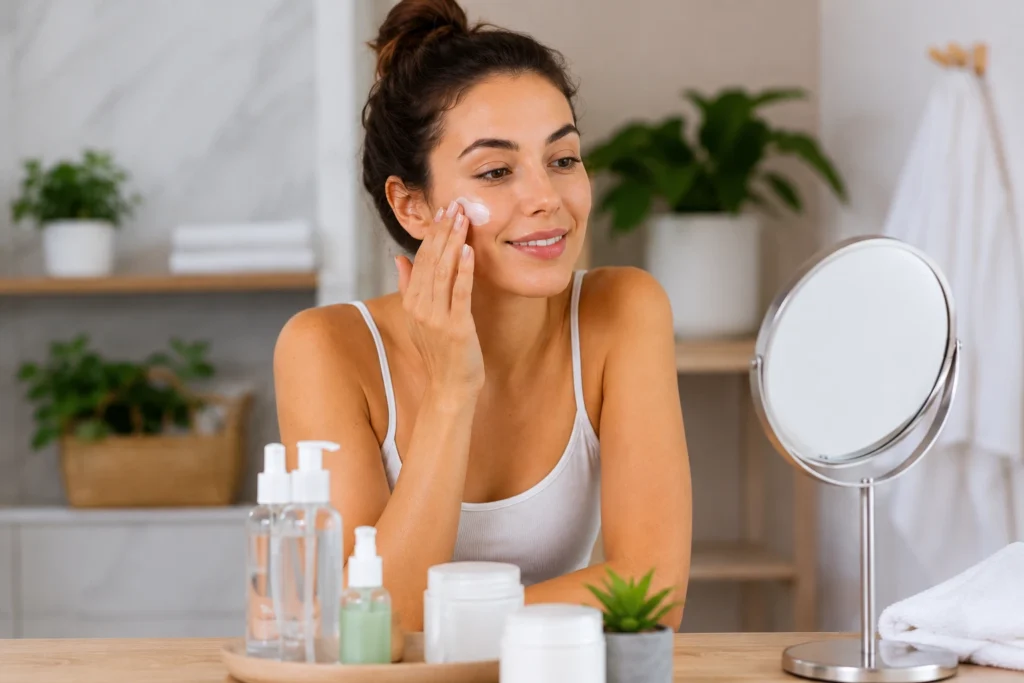
A beginner skincare routine does not need to be complicated. The essential steps are cleansing, moisturizing, and sun protection. Once these steps become part of your day, you can add one targeted serum or treatment.
The morning routine should prepare and protect your skin. The evening routine should remove buildup and help your skin feel clean after exposure to pollution, sweat, sunscreen, and makeup.
A simple morning routine may include:
- Gentle cleanser
- Hydrating or antioxidant serum
- Moisturizer
- Broad-spectrum sunscreen
A simple evening routine may include:
- Gentle cleanser
- Hydrating serum or treatment product
- Moisturizer
Cleansing
Cleansing removes impurities from the skin’s surface and prepares your face for moisturizers, serums, and sunscreen. When your skin is clean, the next products can be applied more evenly.
A good cleanser should leave your skin feeling fresh, not tight or uncomfortable. If your face feels dry, rough, or irritated after washing, the formula may be too harsh.
Dry or sensitive skin may prefer a cream cleanser, lotion cleanser, or hydrating gel cleanser. Oily or combination skin may prefer a gentle foaming cleanser or gel cleanser that removes excess oil without stripping the skin.
You can cleanse once in the morning and once at night. If you wear makeup or water-resistant sunscreen, double cleansing at night may help. Use a cleansing balm or oil first, then follow with a gentle facial cleanser.
Moisturizing
Moisturizing is essential for every skin type. Even oily skin needs hydration. When the skin lacks moisture, it may feel uncomfortable and may produce more oil to compensate, which can make the face look shiny.
A moisturizer helps reduce water loss and supports the skin barrier. It can make the skin feel softer, smoother, and more comfortable. With regular use, it may improve the appearance of dryness and dullness.
The right moisturizer depends on your skin type. Dry skin may need a richer cream with ceramides, glycerin, hyaluronic acid, or shea butter. Oily skin may prefer a lightweight gel cream or oil-free moisturizer. Sensitive skin often benefits from fragrance-free formulas.
Apply moisturizer after cleansing and after any serum. In the morning, use it before sunscreen. At night, moisturizer can be the final step of your routine.
Sun protection
Sunscreen is one of the most important products for glowing and healthy-looking skin. UV exposure can contribute to dark spots, uneven tone, fine lines, rough texture, and loss of firmness over time.
A broad-spectrum sunscreen helps protect against UVA and UVB rays. Apply it every morning, even on cloudy days.
Use sunscreen as the last step of your morning routine. Apply it to your face, neck, and other exposed areas. If you spend time outdoors, sweat, swim, or stay near windows for long periods, reapplication is important.
Many people skip sunscreen because they dislike the texture. Today, there are lightweight fluids, gel sunscreens, mineral sunscreens, tinted sunscreens, and moisturizing sunscreens. Choose a formula you enjoy using daily.
Best ingredients to look for in skincare products
Choosing skincare products becomes easier when you understand common ingredients. Start with a few reliable options that support hydration, brightness, and barrier care.
Hyaluronic acid is popular for hydration. It helps attract water to the skin, making it look fresher and more comfortable. It works well for most skin types.
Glycerin is another useful hydrating ingredient. It helps draw moisture into the skin and appears in many cleansers, creams, and lotions.
Ceramides help support the skin barrier. They are especially useful for dry, sensitive, or stressed skin. A moisturizer with ceramides may help reduce the feeling of dryness.
Vitamin C is often used for brightness and antioxidant support. It may help improve the look of dull skin and uneven tone when used consistently. Many people apply vitamin C serum in the morning before moisturizer and sunscreen.
Niacinamide is a versatile ingredient that may support a more balanced-looking complexion. It can help with the appearance of visible redness, uneven tone, excess oil, and barrier concerns.
Retinol is commonly used in anti-aging skincare. It may support smoother texture and improve the appearance of fine lines over time. Beginners should introduce it slowly because it can cause dryness or irritation if overused.
Common skincare mistakes to avoid
One common skincare mistake is using too many products at the same time. When you start several products together, it becomes difficult to know which one is helping and which one may be causing irritation.
Another mistake is over-exfoliating. Exfoliation can help remove dead skin cells and improve the appearance of dullness, but too much can leave the skin sensitive, red, dry, or uncomfortable.
For many beginners, gentle exfoliation once or twice a week is enough. Avoid combining scrubs, acids, cleansing brushes, and exfoliating masks without understanding how your skin reacts.
Skipping sunscreen is also a major mistake. Some people invest in serums, creams, and masks but forget daily sun protection. Without sunscreen, it becomes harder to maintain an even, glowing complexion.
Using products that do not match your skin type can also create problems. A heavy cream may feel uncomfortable on oily skin. A strong foaming cleanser may worsen dryness. A fragranced product may bother sensitive skin.
Recommended skincare essentials for beginners
If you are building your first skincare routine, start with a small set of essentials. This keeps your routine practical and helps you avoid unnecessary products.
A gentle facial cleanser should be your first product. Look for one that matches your skin type and does not leave your face feeling stripped.
A daily moisturizer is the second essential. Choose a lightweight formula if your skin is oily or a richer cream if your skin is dry.
A broad-spectrum sunscreen is the third essential. For daytime use, sunscreen is one of the best skincare investments you can make. Choose a formula you enjoy applying daily.
After these basics, add one serum based on your main skin goal. If your skin looks dull, consider vitamin C. If your skin feels dehydrated, consider hyaluronic acid. If your skin needs balance, niacinamide may be a good option.
A simple starter routine could look like this:
Morning:
- Gentle cleanser
- Vitamin C or hydrating serum
- Moisturizer
- Sunscreen
Evening:
- Gentle cleanser
- Hydrating serum or treatment product
- Moisturizer
Daily habits that help your skin look better
Skincare products are important, but daily habits also influence your complexion. Glowing skin often reflects a balanced lifestyle.
Hydration matters because dehydrated skin can look dull or tired. Drinking enough water and using hydrating skincare products can support a fresher appearance.
Nutrition also plays a role. A balanced diet with fruits, vegetables, protein, healthy fats, and essential nutrients can support overall wellness, including skin health.
Sleep is another important factor. When you do not sleep enough, your skin may look less refreshed. A consistent sleep schedule can help your body recover and support a healthier appearance.
A simple skincare routine for glowing skin begins with the basics: cleanse gently, moisturize daily, and protect your skin with sunscreen. After that, choose targeted products such as vitamin C, hyaluronic acid, niacinamide, or ceramides based on your needs.
Explore skincare essentials such as gentle cleansers, hydrating moisturizers, antioxidant serums, sunscreen, and self-care products that fit your lifestyle. Small daily steps can make your beauty and wellness routine easier, more enjoyable, and more effective.